SPONSORED CONTENT
Most 4×4 owners hand their vehicle over to a mechanic for jobs they could handle themselves in an afternoon. But here’s the other side of that coin: some DIY attempts on an off-roader end up costing twice the labour bill. The difference isn’t about skill, it’s about knowing exactly where the line is.
A commuter car and a trail-ready SUV do not have the same maintenance requirements. Ramp up the off-road use and the wear curve changes fast: suspension components take a beating on uneven terrain, brake pads work harder on descents, air filters choke on dust within a fraction of their normal service interval. What works as a maintenance schedule for a crossover on paved roads becomes dangerously optimistic on a vehicle that sees mountain trails every other weekend.
Five jobs any 4×4 owner can handle at home
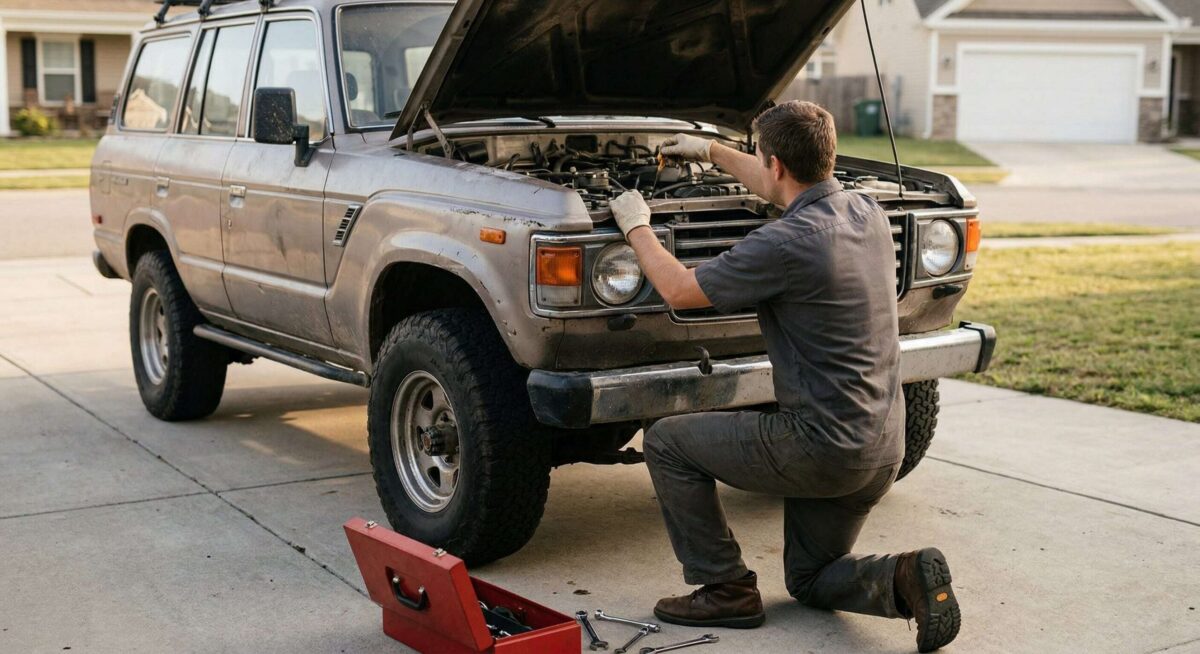
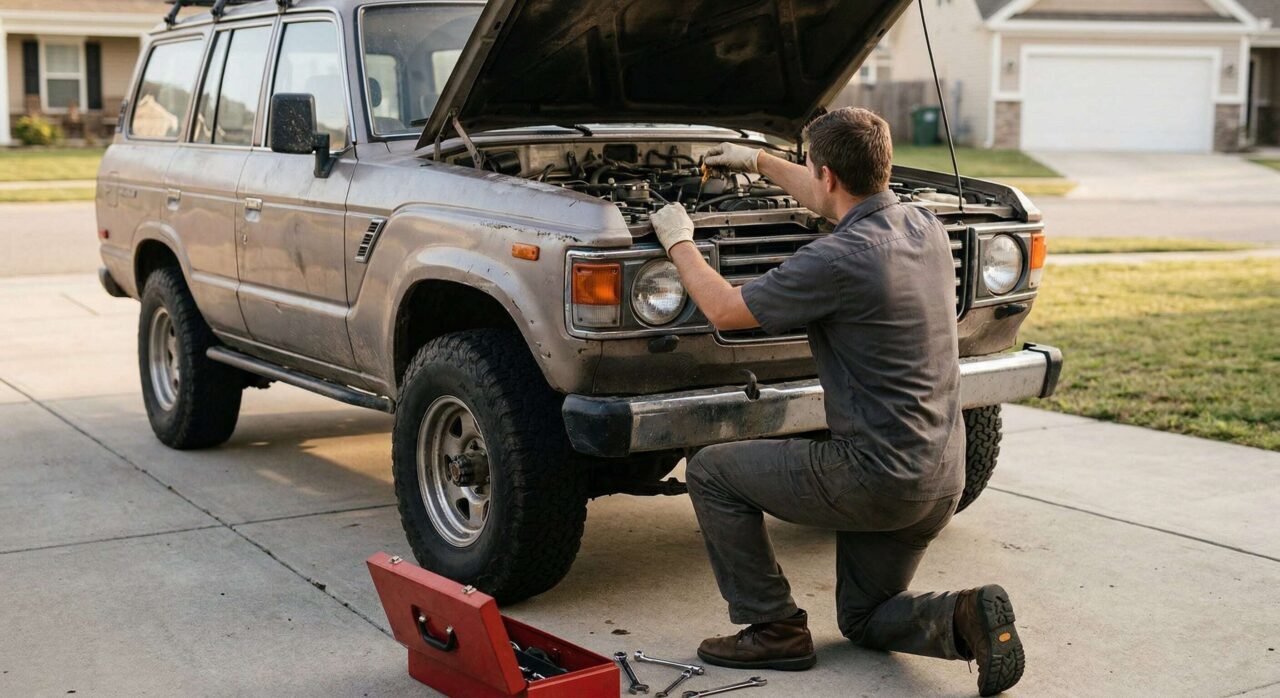
For any 4×4 owner willing to spend a Sunday in the driveway, these five jobs require no specialist equipment and carry low risk if done carefully:
Oil and filter changes remain the most accessible service item, even with larger-displacement engines. Air and cabin filters on SUVs used off-road should be checked far more frequently than the manual suggests because dusty conditions can shorten their life significantly. Front brake pads on most body-on-frame SUVs are straightforward to inspect and replace. Spark plugs (or glow plugs on diesels) are accessible on the majority of traditional off-roaders. Fluid checks, including coolant, brake fluid, and power steering fluid, take minutes and prevent far more expensive failures down the road.
When DIY ends up costing more
Transfer cases, front differentials, and suspension geometry, particularly after a lift kit installation, are a different category entirely. An alignment error after a lift costs more to correct than the alignment itself. Diesel injection pumps punish guesswork. And any fault in ABS, hill descent control, or traction management systems requires a capable scan tool to diagnose correctly. The calculation here is simple: the more a mistake costs to undo, the less sense DIY makes.
The parts compatibility trap most off-road owners fall into
Ordering parts online for a 4×4 is where many DIY projects stall before they start. The standard “make/model/year” filter most retailers use is insufficient for off-road vehicles with multiple drivetrain configurations, engine variants, and regional build differences. A single Land Cruiser generation may carry several different brake caliper specs depending on market and trim.
“We don’t simply react to mistakes – we target the root causes,” says Galyna Stepanova, Head of Customer Feedback at AUTODOC, a European online auto parts retailer, writing on LinkedIn. According to data she cites from the Roland Berger Automotive Aftermarket Pulse 2024 report, incorrect orders and returns in auto parts e-commerce run at 15–20% in B2B and 5–7% in B2C; a scale of error that costs buyers time, money, and delayed repairs.
At AUTODOC, the search system goes beyond make and model. Parts are filtered by engine code and technical specifications, including HSN/TSN codes used across European vehicle registries. Searching by registration number narrows the results to the correct build variant. If a part still can’t be matched, their support team handles the check manually before any order is placed.
On substitutions, the policy is clear: if a requested part is out of stock, an alternative is offered, including from their own brands RIDEX and goCORE, but only after the customer agrees. Nothing ships as a silent swap. Every part comes with a certificate of authenticity, sourced exclusively through official suppliers and distributors. If a supplier error slips through, the replacement is immediate. If the part doesn’t fit despite correct selection, the return window is 14 days at no cost to the buyer.
“Tackling errors isn’t just about reducing complaints. It’s an investment in our customers’ time and trust,” Stepanova notes.
For 4×4 owners, the practical checklist before any online order is short: confirm engine and transmission variant, cross-reference the part number if possible, check whether the retailer distinguishes between your specific build and similar models, and verify return conditions before paying.
What actually separates a smart DIY job from an expensive mistake
DIY on a 4×4 is not about bravado or saving every penny. It’s about accurate self-assessment: which jobs are within reach, which tools are actually in your garage, and do the parts ordered match the actual car sitting in your driveway and not just the model name on the invoice?Get those three things right, and you can save money instead of spending more in the long run.
Sources: Roland Berger, Automotive Aftermarket Pulse 2024; Galyna Stepanova, Head of Customer Feedback, AUTODOC (LinkedIn); Stanislav Prokhoda, Supervisor Technical Care, AUTODOC (LinkedIn); AUTODOC SE press release, February 2026.